Homeowner’s Guide to Impact Windows & Doors:

Buying, Installation & Avoiding Costly Mistakes (2025)

Are you about to upgrade your home’s windows and doors or are considering it? After installing more than 2,000 windows, we know a thing or two about materials and installation. Hang tight and read through this guide.
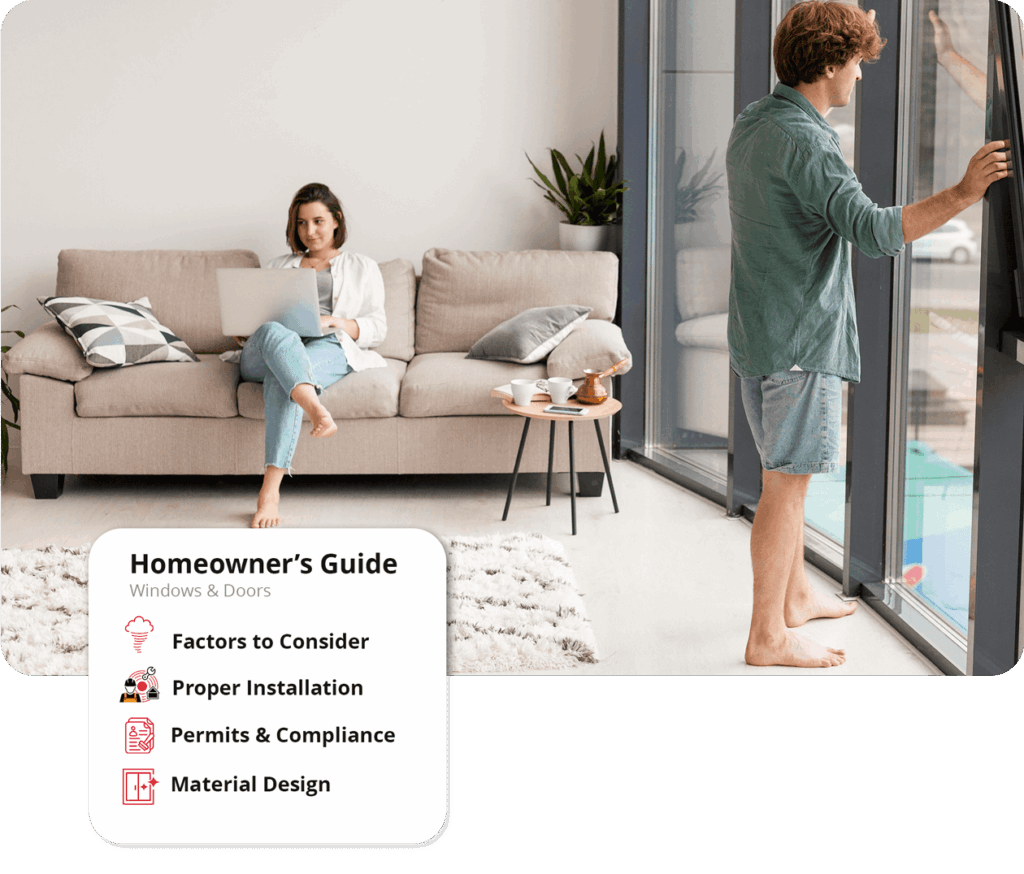
Homeowner's Guide Image

Get the Installation Day Checklist (PDF)

We get it: understanding when to renovate your windows and doors and which contractor to pick can feel overwhelming.  But it’s one of the smartest ways to offset rising energy bills, outdated aesthetics, knockoff lack of security and outside noise. Without a plan in place is easy to get lost with the vast selection of windows to pick, overpay, and overlook the installation process. We’ve put together this step-by-step guide to help you start planning your windows renovation—because homeowner education starts here. Let’s get started!

1. Impact Resistance: Your Home’s Defense

Consider impact windows as armor for your home. Standard impact glass is manufactured by taking two panes of glass and sealing them together at very high heat with a unique plastic layer (PVB) in the middle. This technology was actually derived from automobile windshields – when a projectile strikes it, the glass may crack, but it remains intact rather than flying everywhere. Here is what you need to know regarding thickness:

  • 5/16″ Glass (Standard Protection): This is the thinner option that will cover the minimum requirements for most locations in South Florida. It will protect you, but it is only the minimum.
  • 7/16″ Glass (Premium Protection): Thicker glass provides increased protection – “nothing’s getting through this,” one installer remarked. The extra thickness provides greater resistance to impact and typically decreases sound as well.

Most homeowners opt for 7/16" since the cost difference is generally only $50-100 per window, yet the upgrade in protection is tremendous. Miami-Dade County mandates the hardest standards in the nation - these windows are struck with a 9-pound piece of wood traveling at 50 mph, then subjected to thousands of pressure cycles to mimic hurricane-force conditions.

2. Energy Efficiency: Monthly Savings That Add Up

Low-E (Low Emission) glass is sunglasses for your home. It contains a microscopic coating that bounces heat back outside during summer but allows light to pass through. Here is what the various tints signify:

  • Clear/Transparent tint: Maximum light, good heat reflection.
  • Gray tint: Reduces glare, good for bright rooms.
  • Greenish color: Slightly dims light but superb heat control.

The most important figures to grasp: U-Factor: Lower numbers indicate better insulation (seek 0.30 or less). Solar Heat Gain Coefficient (SHGC): For Florida, you need 0.25-0.30 to keep heat out.

3. Sound Reduction: Peace and Quiet

This advantage may surprise you the most. Impact windows typically carry STC (Sound Transmission Class) ratings of 32-38, whereas standard windows carry 18-20 ratings. What that translates to in everyday life: If you now hear every trash truck, motorcycle, or neighbor’s dog, impact windows will cut that noise by roughly 90%. The noise reduction is due to:

  • Thick laminated glass that reduces vibrations.
  • The air gap between glass panes acts as a sound barrier.
  • Secure seals that don’t allow noise to creep around edges.
One homeowner who lives close to a highway remarked:
Read More
"We went from having 50 decibels of traffic noise indoors to only 35 decibels. It's like we moved to a different neighborhood"

Actual homeowner experience:

“Our electric bills went down around $80 a month after we put in Low-E impact windows. During Florida summers, that adds up quickly – we’ve saved $1,400 already this year alone”.

4. Working with your HOA (if applicable)

If you live in a community with a Homeowners Association, getting approval isn’t optional – it’s required, and ignoring this can cost you big time. Your HOA wishes to preserve the neighborhood’s visual continuity in order to safeguard everyone’s property values. They generally care about:

  • Window colors: Most communities adhere to whites, beiges, or bronzes.
  • Frame materials: Some upscale communities prefer aluminum over vinyl for appearance.
  • Grid patterns: Whether windows have decorative lines between glass panes.
  • Overall style: Maintaining the architectural character.
The Smart Approach

Start early – this takes 30-60 days. Here is what successful homeowners do:

  • Obtain your HOA’s architectural rules initially – prior to shopping even.
  • Check newly approved installations in your area for a guide.
  • Provide complete specifications with colors, materials, and manufacturer images.
  • Choose an experienced contractor who knows your community’s requirements.

Our tip as contractors:​

We keep track of impact windows that have been approved previously for each HOA that we deal with. This saves homeowners months of waiting and negotiations with architectural review boards.
Contractor Tip

5. The installation process

You can buy the most expensive impact windows in the world, but if they’re installed wrong, they might perform worse than cheap windows installed correctly. Critical Installation Factors:

  • Waterproofing and Flashing: Installers need to put flashing in “shingle fashion” – every layer overlaps the one underneath, so water runs off away from your house. Improper flashing results in thousands of dollars of water damage down the road.
  • Precise Measurements: Storm impact windows require precise measurements with tight clearances. Small mistakes can lead to catastrophic failure during a storm.
  • Proper Fastening: Coastal installations need stainless steel fasteners to avoid corrosion. Incorrect screws fail when you require protection the most.
  • Complete Sealing: All openings should be sealed using appropriate materials without warping the frame.
What Poor Installation Costs You
  • Water damage: Hidden leaks behind walls cause rot, mold, and structural damage often exceeding the original window cost.
  • Energy losses: Leaks in air around poorly sealed frames ruin efficiency gains.
  • Sound issues: Installation gaps allow noise to pass through, nullifying noise reduction advantages.
  • Storm failure: Improperly installed windows can fail catastrophically during hurricanes.

6. Building codes and permits: the legal foundation.

Permits are needed for most coastal regions to install impact windows – and foregoing this leads to trouble:

  • Insurance problems: Your insurance might not cover damage if windows were not permitted correctly.
  • Resale issues: Unauthorized work can slow or kill home sales.
  • Safety issues: Code requirements make sure your windows will really keep you safe.
  • Legal liability: Can result in fines and orders to remove completed work.

The Permit Process:

  • Application: Contractor files detailed plans indicating window specifications and methods of installation.
  • Review: Building officials check for code compliance (usually 30-50 days).
  • Inspections: Authorities check work for correct installation.
  • Final approval: Ensures windows are safe and function properly.

Florida Building Code explicitly demands that impact windows pass rigorous installation requirements, such as correct flashing and fastening techniques. Prior to installation, ensure your windows have the necessary certifications for your region:

  • Miami-Dade Product Control Approval (most strict standard)
  • Florida Product Approval for other locations in Florida
  • ASTM E1996 and E1886 for compliance to impact resistance
  • NFRC certification for energy performance

7. How to choose a contractor?

Permits are needed for most coastal. Questions to ask a contractor under consideration:

Experience & Proper Documentation:

  • Are you licensed and insured? Verify they have the necessary licenses and insurance (liability and workers’ compensation).
  • Can you provide references? Ask for recent references and check online reviews.
  • Do you offer a warranty? Understand the coverage for both labor and materials.

Project Timeline & Details:

  • What is the estimated timeline for the project? Understand the start and end dates, and what might cause delays. 
  • Do you handle permits and inspections? Ensure they will take care of the necessary paperwork and approvals. 
  • How do you handle issues or concerns during the project? Discuss their communication process and how they address problems. 

Payment Processing:

  • What is your payment schedule? Clarify how and when payments will be made.
  • Do you offer financing? Understand financing options available and requirements.